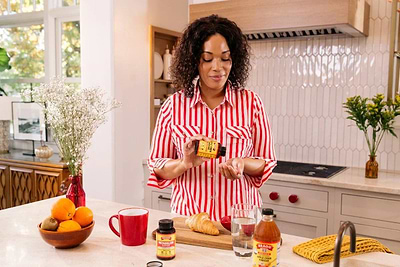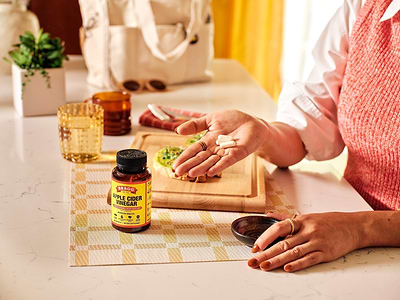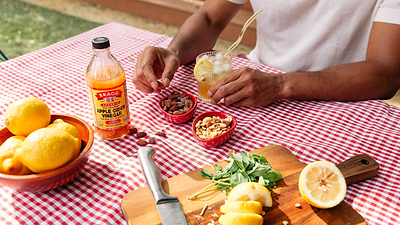

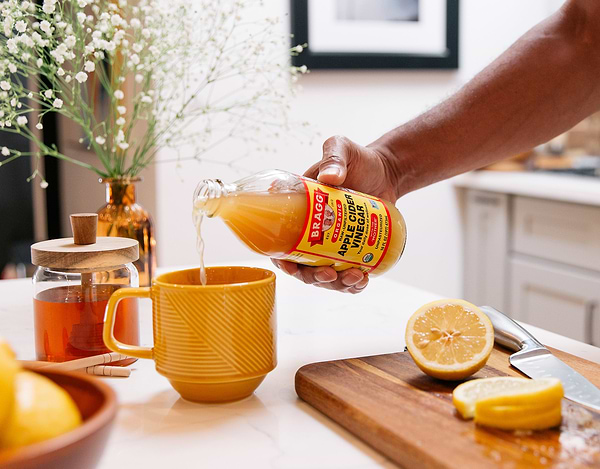

There's a quiet satisfaction in setting down a dressing you made yourself, especially when the table is full and the meal matters. A healthy homemade salad dressing puts you in charge of the flavor and the ingredients: good extra-virgin olive oil, the bright tang of apple cider vinegar, and a handful of fresh herbs.
At Bragg®, the philosophy starts with mindful nourishment, daily balance, and plant-forward eating. Holiday meals are a natural place for that.
Below are three adaptable dressing recipes built for the season: a classic vinaigrette, a creamy option, and a citrus-forward pour. Each is simple enough to whisk together while the oven's busy, and each is designed to complement what's already on the plate.
Why Make Your Own Dressing?
Making your own dressing is about three things: flavor, freshness, and knowing exactly what went into the jar.
- You choose the ingredients: When you make a dressing at home, you decide how much salt, oil, and sweetness go in. A teaspoon of maple syrup, a drizzle of honey, or a pinch of granulated sugar are all options.
- It's built from pantry staples: Most dressings come down to three parts: a fat, an acid, and seasonings. Oil, vinegar, citrus, mustard, garlic, herbs, and spices are probably already in your kitchen.
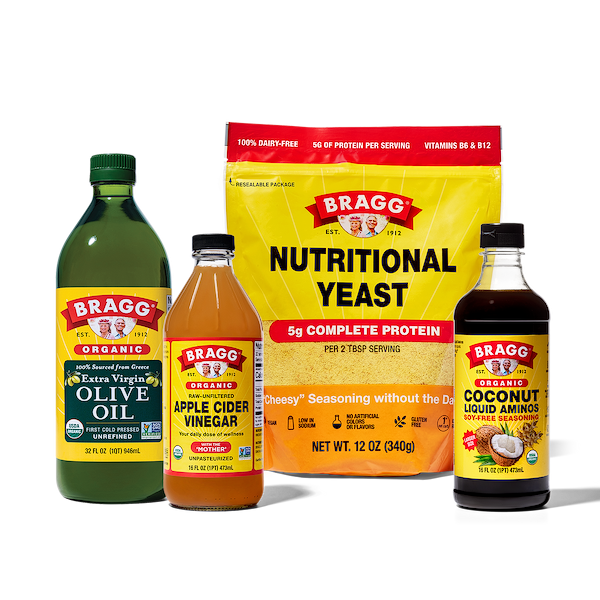
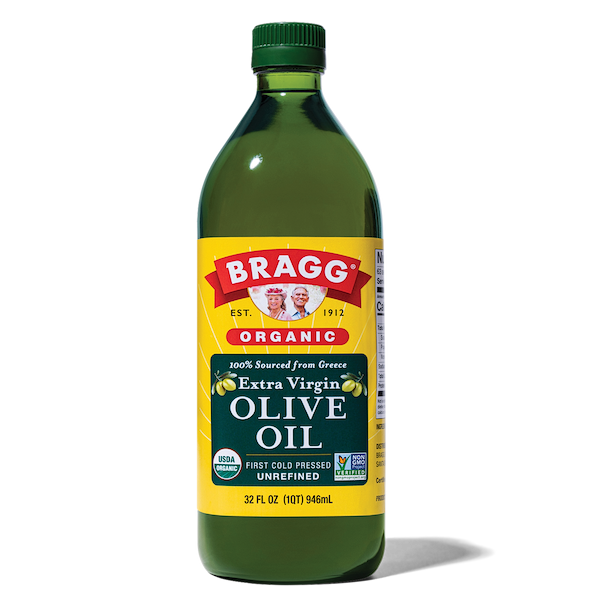
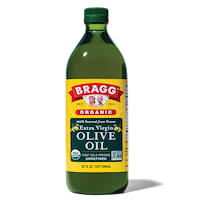
- It fits a food-first plate: Harvard's Healthy Eating Plate encourages people to use healthy oils (like Bragg® Organic Extra Virgin Olive Oil) for cooking, on salad, and at the table.[¹] A homemade dressing is one everyday way to bring that guidance to the table.
- It's fresh by design: Homemade salad dressing is made without preservatives,[²] so it's meant to be enjoyed soon after you make it. That's part of its appeal: bright herbs, fresh lemon, a dressing that tastes like the day you made it.
The Basic Formula: Oil + Acid + Emulsifier + Seasoning
Most salad dressings follow one simple pattern.
Start with the ratio
A classic vinaigrette uses about three to four parts oil to one part acid, so three parts oil to one part vinegar or citrus juice is a good place to start. If you want more tang, use a little less oil. If you want it softer, use a little more.
Choose your oil
- Extra virgin olive oil: fruity and peppery, the classic choice for vinaigrettes. Olive oil is high in beneficial monounsaturated fatty acids.[³]
- Avocado oil: milder and more neutral in flavor than olive oil. It's a good pick when you want citrus or herbs to lead.
- Sesame oil: toasted sesame oil is bold, so use it as an accent, often a teaspoon or two blended with a milder oil.

Choose your acid
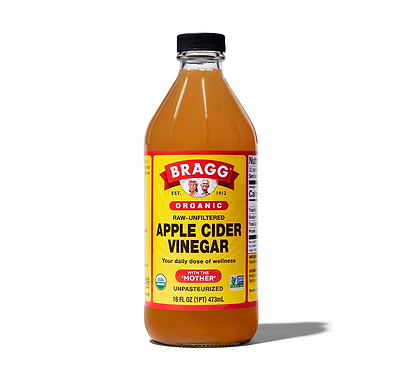
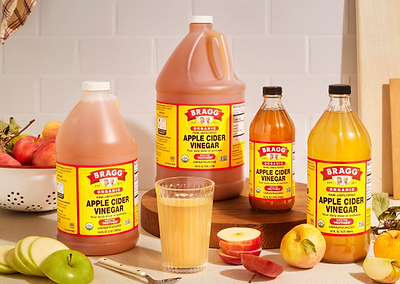
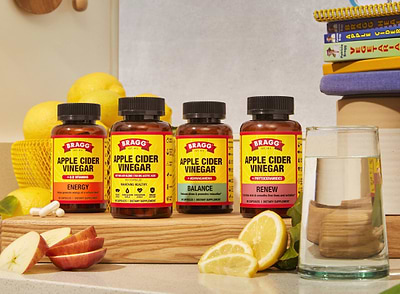
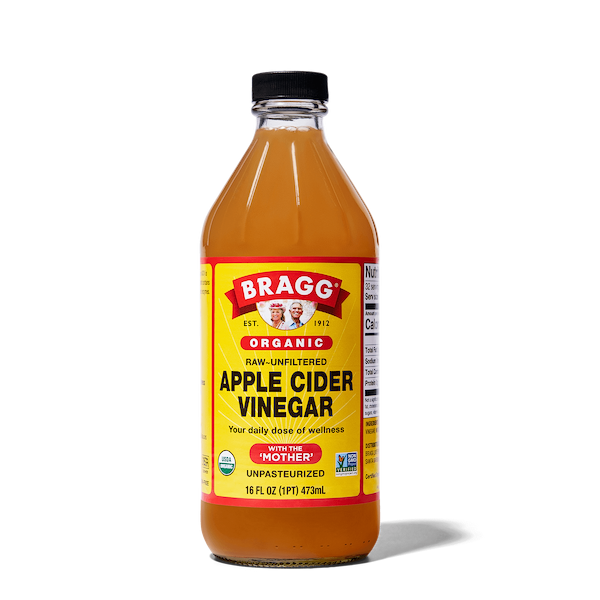
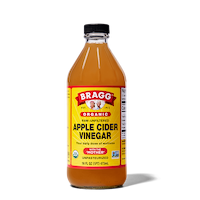
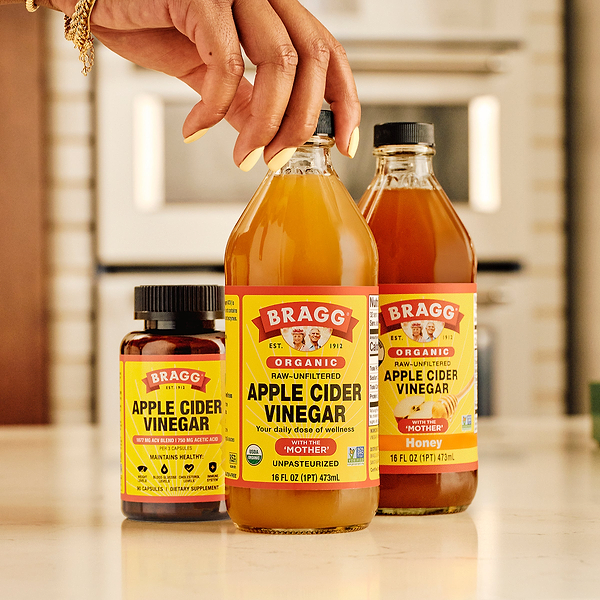
- Bragg® Apple Cider Vinegar: softly fruity, a natural match for fall and winter produce.
- Balsamic vinegar: deep and slightly sweet.
- Red wine vinegar or white wine vinegar: crisp and classic.
- Rice vinegar: mild and gentle.
- Lemon juice, lime juice, and orange juice: bright and fresh. Lemon and lime juice can carry a dressing on their own, while orange juice tastes best paired with a splash of vinegar.
Add an Emulsifier and Seasoning
Oil and vinegar separate on their own. Ingredients like Dijon mustard and garlic help hold the two together, which is why so many dressing recipes start with a spoonful of mustard. After that, add salt, black pepper, fresh herbs or dried herbs, and spices to suit your taste buds.
Why the Oil Matters on a Salad
The fat in a dressing does more than carry flavor.
Plant-based oils have been studied for a wide range of potential health benefits.[⁴] There's also some evidence that the oil in a dressing may help the body absorb fat-soluble nutrients, like carotenoids, from the vegetables in a salad.[⁵][⁶]
It's one reason a well-balanced, oil-based dressing belongs on a vegetable-forward plate.
Recipe 1: Classic Apple Cider Herb Vinaigrette
This is the everyday house dressing, at a 3:1 ratio with a little Dijon to hold it together.
Makes about 1 cup | 5 minutes
Ingredients
- ¼ cup Bragg® Organic Apple Cider Vinegar
- ¾ cup Bragg® Organic Extra Virgin Olive Oil
- 1 tablespoon Dijon mustard
- 1 small garlic clove, finely minced
- 1–2 teaspoons maple syrup or honey
- 2 tablespoons chopped fresh herbs (parsley, chives, thyme)
- ½ teaspoon salt, plus more to taste
- Freshly ground black pepper
Steps
- In a bowl or jar, whisk the vinegar, mustard, garlic, maple syrup or honey, salt, and pepper.
- Pour in the olive oil in a slow stream while whisking, or seal the jar and shake until glossy.
- Stir in the herbs. Taste on a leaf of whatever you're serving, then adjust the salt or sweetness.
Variation 1: Balsamic Vinaigrette
Replace the apple cider vinegar with 2 tablespoons balsamic vinegar and 2 tablespoons red wine vinegar, and swap in 1 teaspoon of dried herbs, such as oregano, for the fresh. This balsamic vinaigrette pairs well with roasted squash, figs, or a cheese board.
Variation 2: Honey Mustard
Increase the Dijon to 2 tablespoons and use honey as the sweetener. It's rounded, tangy, and family-friendly.
For a tested version, try our Honey Mustard Vinaigrette.
Recipe 2: Creamy Greek Yogurt Herb Dressing
A creamy dressing with a bright, herby finish that holds up next to rich holiday sides.
Makes about 1 cup | 10 minutes
Ingredients
- ¾ cup plain Greek yogurt (or plain plant-based yogurt)
- 2 tablespoons extra virgin olive oil
- 2 tablespoons lemon juice
- 1 tablespoon Bragg® Organic Apple Cider Vinegar
- 1 garlic clove, grated
- 2 tablespoons chopped fresh dill
- 2 tablespoons chopped fresh basil
- ¼ teaspoon salt and black pepper to taste
- 1–3 tablespoons water, to thin
Steps
- Whisk the yogurt, oil, lemon juice, vinegar, and garlic until smooth.
- Fold in the dill and basil, then season with salt and pepper.
- Thin with water a spoonful at a time until it pours. For a smoother, pale-green dressing, blend everything in a food processor.
Make it a dip
Skip the water, and the same yogurt base becomes a dip for crudités on the appetizer table. Our Creamy Dill Dressing takes a similar approach.
Variation: Lemon Tahini
Whisk ⅓ cup tahini with 3 tablespoons lemon juice, 1 grated garlic clove, a pinch of salt, and enough cold water to make it pourable. A touch of maple syrup rounds it out. It's lovely over roasted vegetables and grain salads, and it doubles as a dip too.
Recipe 3: Citrus-Ginger Pour
A bright, tangy pour that brings a little sunshine to a winter table.
Makes about ¾ cup | 5 minutes
Ingredients
- ⅓ cup fresh orange juice, plus 1 teaspoon orange zest
- 2 tablespoons lime juice
- 1 tablespoon white wine vinegar
- 1 teaspoon freshly grated ginger
- 1 teaspoon maple syrup
- ½ teaspoon Dijon mustard
- ⅓ cup avocado oil
- Pinch of salt
Steps
- Whisk the orange juice, zest, lime juice, vinegar, ginger, maple syrup, mustard, and salt.
- Slowly whisk in the avocado oil, or shake everything in a jar.
- Taste. Add a squeeze more lime for brightness or a few drops of maple syrup for sweetness.
Variation: Sesame-Ginger.
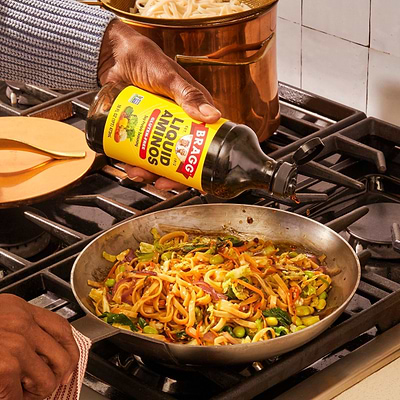
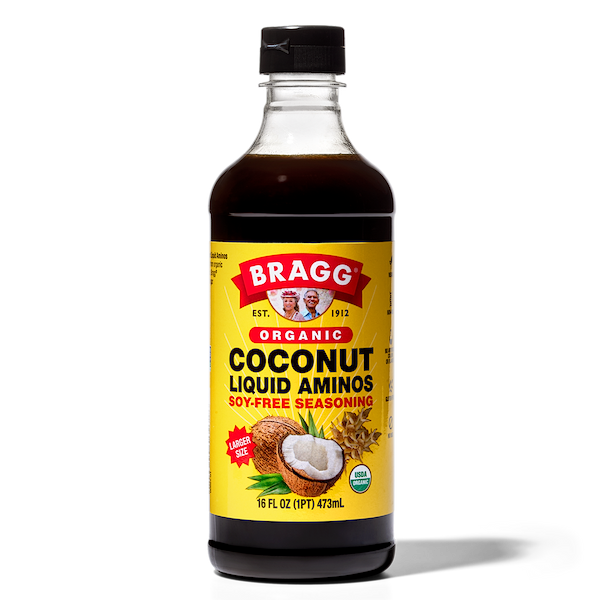
Combine 3 tablespoons rice vinegar, 1 tablespoon soy sauce or Bragg® Liquid Aminos, 1 tablespoon lime juice, 2 teaspoons toasted sesame oil, 1 teaspoon grated ginger, 1 teaspoon honey, and ¼ cup avocado oil. It's tasty over shredded cabbage, snap peas, or a cold noodle salad.
Holiday Pairing Guide
A good dressing is about balance: something bright next to something rich.
| Dressing | Pairs well with |
|---|---|
| Apple cider herb vinaigrette | Simple green salads, kale with apples and pecans, roasted Brussels sprouts |
| Balsamic vinaigrette | Roasted squash, tomatoes, and fresh mozzarella, bitter greens like radicchio |
| Honey mustard | Grain salads, roasted carrots, and a drizzle over grilled meats |
| Greek yogurt herb dressing | Crudités, potato salad, wedge salads, salmon |
| Lemon tahini | Grilled vegetables, roasted cauliflower, chickpea salads |
| Citrus-ginger pour | Fennel and citrus salad, winter greens with pomegranate |
| Sesame-ginger | Slaws, shredded Brussels sprouts, and a side of greens next to roast pork |
Make-Ahead and Storage Tips
- Pick your method: A jar with a tight lid lets you shake and store in one step. A food processor gives creamy dressings the smoothest texture.
- Refrigerate in an airtight container: Homemade salad dressings can be kept in the refrigerator for 2 to 3 weeks, according to the U.S. Department of Agriculture FoodKeeper app [⁷]. However, the amount of time can be considerably shorter depending on the ingredients you use. Using any cream-based ingredients, raw eggs, or garlic will significantly shorten the shelf life of homemade dressings.
- Shake before serving: Olive oil can turn cloudy or thicken in the refrigerator. Let the jar sit at room temperature for a few minutes, then shake or whisk.
- Label it: A strip of tape with the name and date makes the holiday fridge easier to manage.
Frequently Asked Questions
What makes a homemade salad dressing healthy?
A homemade salad dressing healthy enough for everyday meals usually starts with a plant-based oil, an acid like vinegar or citrus, and seasonings such as herbs, garlic, and mustard. Harvard's Healthy Eating Plate encourages using healthy oils like olive oil on salad [¹] and using fresh or dried herbs to add plenty of flavor. The rest comes down to balance and taste.
How long does homemade dressing last?
Homemade vinaigrettes can be kept in an airtight container in the refrigerator for 2 to 3 weeks, according to the USDA FoodKeeper App.[⁷] Dressings made with cream-based ingredients, raw eggs, or garlic have a shorter shelf life, so plan to enjoy those sooner.
Can I make dressing without added sugar?
Yes. A splash of orange juice, a little extra mustard, or a softer vinegar, like rice vinegar, can round out the acidity without a sweetener. If you do sweeten your dressing, the FDA counts honey and syrups as added sugars and lists the Daily Value for added sugars as 50 grams per day, based on a 2,000-calorie diet. [⁸]
The FDA also points to the Dietary Guidelines for Americans, which state that a limited amount of added sugars can be part of an overall healthy eating pattern. [⁸] Homemade means you set the amount.
What is a natural salad dressing?
"Natural" doesn't have a single definition when it comes to food. Most cooks use the term for a dressing made from recognizable whole-food ingredients: oil, vinegar or citrus, mustard, garlic, herbs, and spices. A homemade healthy salad dressing, made that way, lets you see every ingredient.
How do I compare a homemade dressing with a bottled one?
If you keep store-bought dressings on hand too, the Nutrition Facts label lists calories, sodium, and added sugars per serving. The U.S. Food and Drug Administration notes that 5% Daily Value or less of added sugars is considered low. [⁸]
Labels are also handy for ingredients like ketchup, which some creamy, Thousand Island–style dressings use; checking the label on your ketchup helps you know what's in the bowl. When people ask for the best organic salad dressing, a good answer is often the one you whisk together from organic pantry staples you already trust.
A Dressing Made With Care
Healthy salad dressings don't need to be complicated.
They're a small, consistent habit: a jar shaken before dinner, a quick taste and a pinch more salt, a recipe that becomes your own over time. That's what mindful nourishment looks like in everyday home cooking, and what vibrant living looks like at a full holiday table. Make one of these healthy salad dressing recipes this week, and let it earn its place at the table.
Stock Your Holiday Pantry
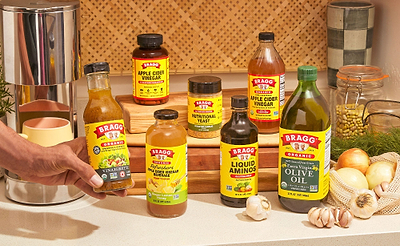
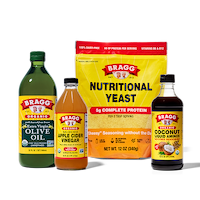
With a bottle of Bragg® Organic Apple Cider Vinegar and Bragg® Organic Extra Virgin Olive Oil on the shelf, you have the base for most of the dressings above. Add a jar of Dijon, a few lemons, and a bunch of fresh herbs, and you're ready to whisk up whatever the holiday menu calls for.
Read More From Bragg:
- Healthy Pantry Staples to Keep on Hand at All Times
- Which Apple Cider Vinegar Is Best for Cooking?
- Learn About Olive Oil
- Liquid Aminos vs. Soy Sauce: What's the Difference?
Sources
- https://nutritionsource.hsph.harvard.edu/healthy-eating-plate/
- https://edis.ifas.ufl.edu/publication/FY1502/pdf
- https://nutritionsource.hsph.harvard.edu/what-should-you-eat/fats-and-cholesterol/types-of-fat/
- https://pmc.ncbi.nlm.nih.gov/articles/PMC11374968/
- https://pmc.ncbi.nlm.nih.gov/articles/PMC5611781/
- https://pubmed.ncbi.nlm.nih.gov/15277161/
- https://www.foodsafety.gov/keep-food-safe/foodkeeper-app
- https://www.fda.gov/food/nutrition-facts-label/added-sugars-nutrition-facts-label