











Supporting your metabolism is really about supporting how your body uses and manages energy throughout the day. Because metabolism is influenced by factors such as diet, movement, meal patterns, and daily habits, many people are looking for practical ways to support their overall metabolic health as part of a balanced lifestyle.
That growing interest has also increased attention around metabolism support supplements, including ingredients like apple cider vinegar and botanical blends. Metabolism support supplements are often incorporated into broader wellness routines.
This article breaks down what metabolism actually is, what to look for in metabolism support supplements, and how these products fit into a broader food-first approach to wellness.
Table of Contents
What Metabolism Actually Is
To understand everything else, let’s start with what metabolism actually is.
People often talk about having a “fast metabolism” or a “slow metabolism,” but metabolism is more complex than a single speed setting. It refers to a network of processes happening throughout the body that help convert food into energy and regulate how that energy is used and stored [1].
Hormones, digestion, physical activity, sleep, age, genetics, and meal composition can all influence metabolic function over time [2]. Because so many factors are involved, metabolism is best understood as a system of multiple processes working together rather than a single mechanism.
This context matters when evaluating metabolism-support supplements. These products are designed to fit within broader wellness routines that may also include balanced meals, movement, sleep, and consistent habits, not replace them.
How Your Body Turns Food Into Energy
At its core, metabolism is the process by which your body turns food into energy. Every time you eat, your body gets to work. It breaks down three important nutrients: carbohydrates, fats, and protein. These are known as macronutrients and are sent to the different parts of the body where they’re needed.
Some of that energy is used immediately to support essential functions such as breathing, circulation, and cellular repair, while the rest is stored for later use.
How Energy Is Used, Stored, and Regulated
Metabolism also involves how your body manages and distributes that energy. Hormones help coordinate when you feel hungry and full, and how your body decides to use or store fuel. How much you store or use is also determined by genetics, age, meal composition, and physical activity levels.
This context matters when evaluating metabolism-support supplements. These products aren’t targeting a single pathway or “turning something on.” They’re positioned around supporting parts of a broader system.
Why This Changes How You Evaluate Products
Once you understand metabolism this way, the evaluation becomes more practical. Instead of asking “Does this boost metabolism?” the better question becomes “What role does this play within the metabolic system?”
If you want to explore how foundational ingredients work together to support everyday routines, this article is a great place to start: The Ultimate Guide to Natural Wellness: Daily Habits, Ingredients, and Routines to Support Your Health.

What to Look for in Metabolism Support Supplements
So how do you actually evaluate metabolism support supplements without getting pulled into the noise?
It helps to step back and look at how a product is built, how it fits into your routine, and how it connects to broader wellness habits related to food intake and impact energy balance and appetite over time. Once you understand that, the decision becomes less about chasing results and more about recognizing what actually makes sense.
Start With What You Can Actually Understand
The first filter is simple: can you understand what you’re looking at?
All dietary supplements must include a Supplement Facts panel listing active ingredients, serving amounts, and other added ingredients. But beyond simply having that information available, it helps when a label is easy to read, and the formula itself is clearly explained.
That means being able to quickly understand what ingredients are included, how much of each is present, and why those ingredients may have been combined within the formula. It’s especially helpful when brands clearly identify featured ingredients, such as apple cider vinegar or botanical blends, rather than relying heavily on vague marketing language.
In practice, this looks like being able to answer simple questions: Do I recognize these ingredients? Are the amounts clearly listed? Is the formula explained in a way that feels transparent and easy to follow?
It can also help when ingredients connect back to foods, herbs, or beverages people may already recognize from everyday routines and cooking.
If you want to feel more confident reading ingredient lists, serving amounts, and Supplement Facts panels, check out How to Read Nutrition Facts & Supplement Labels Like a Pro for a deeper breakdown of what labels actually mean and what to look for when comparing products.
Avoid Single-Ingredient Thinking
One of the biggest misconceptions about metabolism-support supplements is the idea that a single ingredient is responsible for everything. In reality, metabolism involves multiple interconnected processes throughout the body, which is why many formulations combine ingredients rather than focusing on a single ingredient.
This does not necessarily mean “more ingredients = better.” Instead, it highlights the importance of understanding how ingredients fit into a broader wellness routine that may also include balanced meals, movement, sleep, and consistent habits over time.
For example, one combination that has been researched in areas related to metabolic health, digestion, appetite regulation, and post-meal responses combines apple cider vinegar with botanical blends of hibiscus and lemon verbena [3],[4]. Rather than focusing on a single ingredient, this type of formulation reflects the idea that metabolism involves multiple interconnected processes working together throughout the body.
That takes us to the third thing to look for: consistency.
Ask: Can I Actually Stick With This?
This is the most overlooked question, and often the most important. Does the supplement fit into your life in a way that feels realistic? Can you take it consistently without changing everything else about your routine?
If the answer is no, it doesn’t matter how good the formulation looks on paper. The value of any supplement comes from how well it integrates into your habits. The easier it is to repeat, the more useful it becomes.
Where Metabolism Support Supplements Fit in Your Routine
Supplements are not designed to replace balanced meals, movement, or daily habits. Instead, they are intended to complement broader wellness routines. That distinction is important, especially in a category where expectations can easily become unrealistic.
Even the U.S. Food and Drug Administration makes this distinction clear, saying: “Dietary supplements are intended to add to or supplement the diet and are different from conventional food.”
For a deeper look at how to evaluate ingredients and understand their role in your routine, our guide expands on this: Your Ultimate Guide to Supplements: How to Know What You Need & Pick Supplements That Actually Work.
A Nutrient-First Approach
At Bragg®, the philosophy starts with mindful nourishment, daily balance, and plant-forward eating. Whole ingredients, balanced meals, and consistent habits form the foundation of that approach. From there, supplements can build on that foundation.
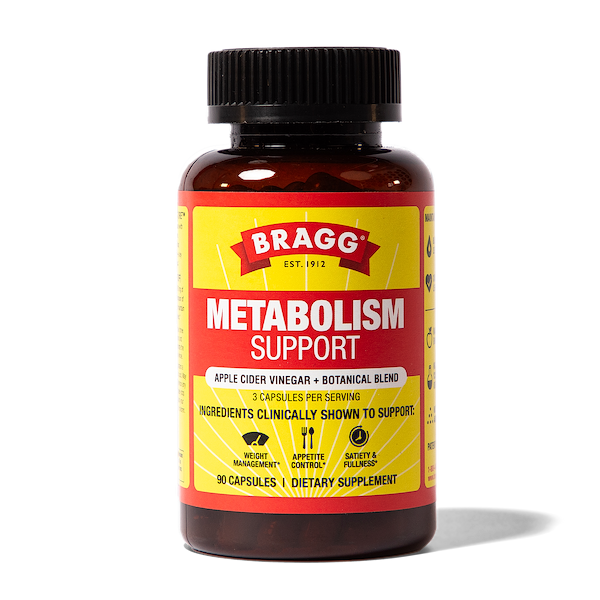
In our Metabolism Support Supplement, lemon verbena is included in a blend with hibiscus and apple cider vinegar, as part of a formula designed around complementary ingredients rather than a single ingredient.
This reflects a broader shift in the supplement industry. More focus on how multiple components are layered together in a structured way.
Shop Bragg® Metabolism Support Supplement
Inside the Formula
Botanical Blend (Metabolaid®: Hibiscus + Lemon Verbena)
Metabolaid® [5] brings together two plant-based ingredients with a long history of use in teas and herbal preparations. In modern formulations, this combination has been researched for its potential role in satiety and the body’s response to food [6],[7]. Rather than positioning lemon verbena as a standalone driver, it is included here as part of a structured blend.
If you’re interested in how other plant-based ingredients are researched and incorporated into broader wellness routines related to stress, balance, and daily health habits, this article offers a helpful overview: What Is Ashwagandha? Benefits, Uses, and Potential Side Effects
Acetic Acid (from Apple Cider Vinegar)
Acetic acid is what you could call “the good stuff” in apple cider vinegar [8]. It’s a naturally occurring compound created during fermentation. Bragg® Metabolism Support provides 750 mg of acetic acid per serving, offering a consistent amount within the formula.
It’s often included in discussions around weight management, blood sugar patterns, and digestive processes, not as a standalone solution, but as part of broader wellness routines connected to metabolic health [9],[10],[11]. Metabolism itself is one broader system involving multiple interconnected processes related to how the body uses energy, responds to food, regulates appetite, and manages digestion over time.
Like the botanical blend, apple cider vinegar is intended to complement a broader food-first lifestyle that may also include balanced meals, movement, sleep, and consistent habits rather than function independently of those routines.
If you’re exploring how ingredients like lemon verbena and apple cider vinegar fit into a bigger picture of daily habits, this guide is a helpful place to start: Ultimate Guide to Natural Wellness: Daily Habits, Ingredients, and Routines to Support Your Health.
Final Thoughts: What Actually Matters
If you take one thing from this, let it be this: metabolism support supplements are not about finding the one ingredient that changes everything. They’re about understanding how a product fits into the bigger picture of how your body works.
Your metabolism is shaped, in part, by what you eat, how you move, and how consistently you eat well and exercise. Supplements may complement broader wellness routines, but they do not replace balanced meals, movement, sleep, or consistent habits.
The real value comes from choosing products that are transparent, structured, and aligned with routines you can actually maintain. When you focus on what’s repeatable and grounded in how the body functions, you’re making decisions that actually fit your life.